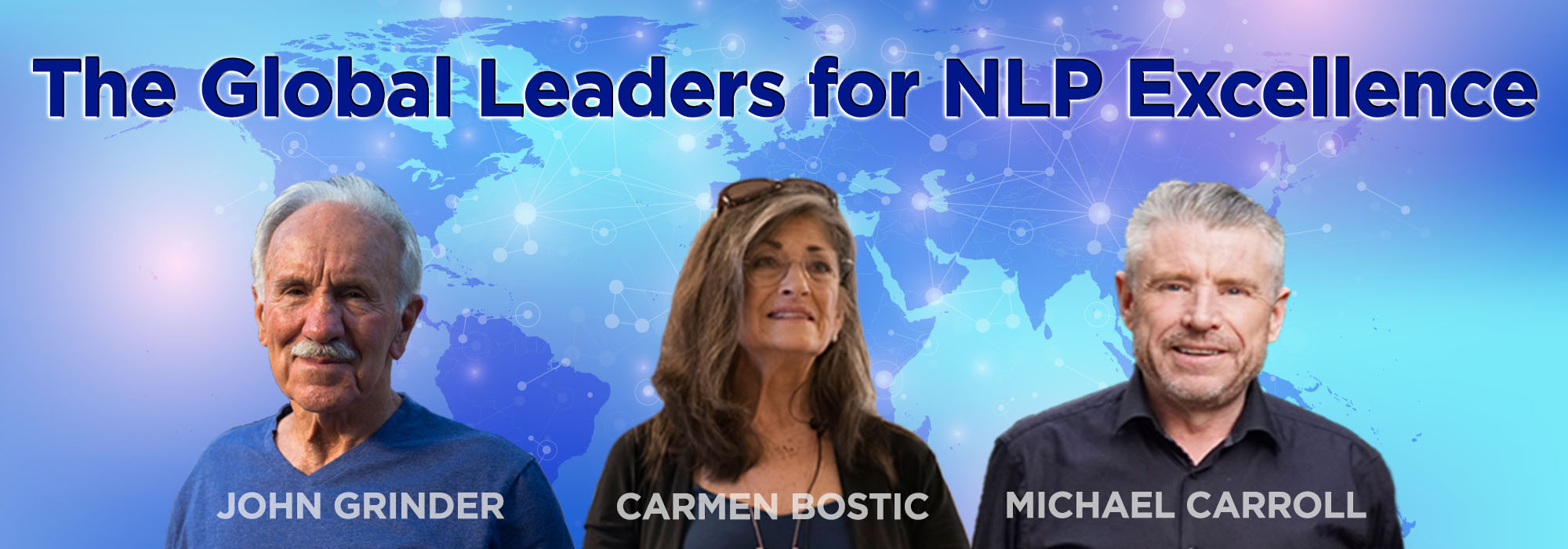
Welcome to the NLP Academy, the global leader for NLP excellence, with over 25 years of experience in providing NLP Training to the highest of standards. The NLP Academy is the only Institute where you can learn directly from NLP co-creator Dr John Grinder, Carmen Bostic St Clair and Michael Carroll.
There are multiple learning channels for learning NLP at the Academy to suit different lifestyles and attitudes in a rapidly changing world.
There are the original style physical world classes and there is ‘The NLP in your Home’ option for people to attend our courses through live stream in the comfort of their own home.
There are also satellite options where learners attend a physical class hosted by a ‘Satellite Partner’ in a local venue, and The NLP Training from John Grinder, Carmen Bostic and Michael Carroll is streamed live to the Satellite class offering all the practical benefits of live training. Whether you join an NLP Academy course in a physical location, online at home, or a satellite, you are assured of a high quality NLP learning experience from one of the most innovative and experienced NLP Training teams on the planet.

NLP Training Excellence
Welcome to the NLP Academy, the leading training provider of NLP courses. Enjoy browsing our site where you will find information on NLP certification courses ranging from NLP Practitioner Training, NLP Master Practitioner Training and NLP Trainers Training. The lead training team consists of NLP co-creator John Grinder , New Code NLP co-creator Carmen Bostic St Clair and New Code NLP developer and Master NLP Trainer Michael Carroll. Your NLP qualification is issued through the ITA and is internationally recognised for its authenticity and prestige. Train with the NLP Academy and you are assured that your NLP Training experience is with one of the most respected companies in the world.
Why Choose Us

ORIGINALITY
NLP from the co founder John Grinder with Carmen Bostic St Clair and Michael Carroll
DIVERSITY
People from all over the globe choose to study with the NLP Academy making your learning experience unique
INNOVATION
The latest developments in NLP, New Code NLP from its creators Grinder and Bostic, and co developer Michael Carroll
Our Mission
The mission of the NLP Academy is 'to set the educational standard in the field.' We do this through constantly pushing the boundaries, offering the highest quality of resources to our family of students and post graduate community.
Our Reviews